


Facts About Water
Where is Earth's Water?
Kenya's Waters Run Deep
Illustration: Countries & Capital Cities Named After Freshwater
Sources: The Demography Project
Kenya's Waters Run Deep
The Ticking Draining Time Bomb
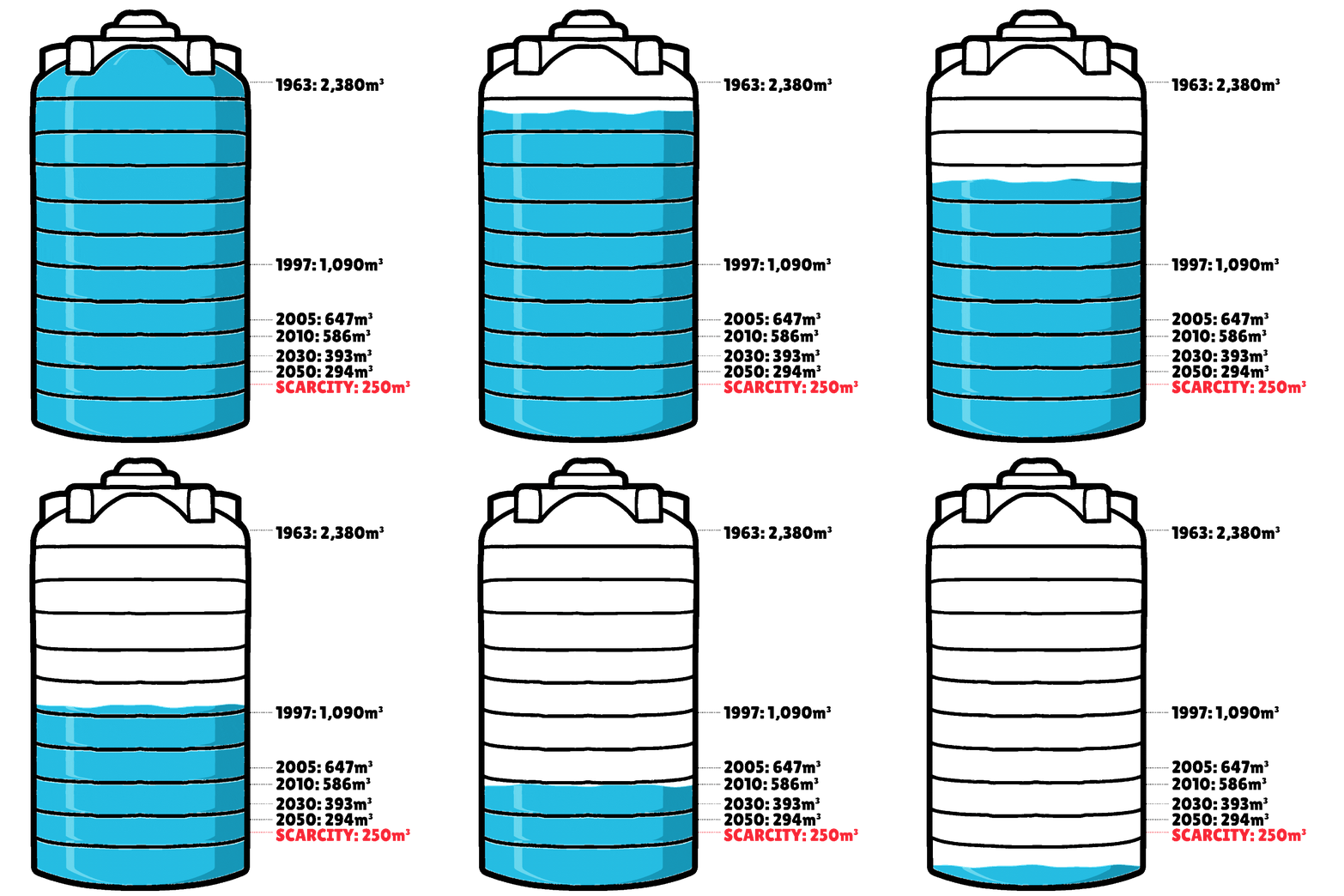
Animation: Kenya's per capita freshwater availability (m³ / person / year), 1963–2050
Sources: World Bank, UN FAO AQUASTAT, Falkenmark Water Scarcity Index (1997), IPCC AR6 (2021), Kenya National Water Masterplan 2030 (NWMP 2030)
Unequal Availability
Animation: Kenya's per capita freshwater availability (m³ / person / year), 1963–2050
Sources: Per-person values are computed from NWMP 2030 catchment available-water-resource figures and NWMP population projections. Basin 2010 populations are inferred from NWMP basin renewable-water-per-capita statements, then scaled by the NWMP national population projection for each decade.
The Economic Cost of Unsafe WASH
Animation: Kenya's per capita freshwater availability (m³ / person / year), 1963–2050
Sources: World Bank, UN FAO AQUASTAT, Falkenmark Water Scarcity Index (1997), IPCC AR6 (2021), Kenya National Water Masterplan 2030 (NWMP 2030)
The Human Cost of Unsafe WASH
Illustration: Estimated Mortality from Inadequate WASH per County
Note::County values are modelled allocations of the 17,000+ national annual estimate, not official vital-registration counts.
Lack Access to Safe Water
41% of Kenyans rely on unimproved or surface water sources
Lack Access to Safe Water
41% of Kenyans rely on unimproved or surface water sources
Over 17,000 under-5 deaths annually attributed to WASH-preventable diarrhoeal diseases (UNICEF Kenya 2023)
The Ticking Draining Time Bomb
Animation: Kenya's per capita freshwater availability (m³ / person / year), 1963–2050
Note:: County values are modelled allocations of the 17,000 national annual estimate, not official vital-registration counts.
The Ticking Draining Time Bomb
Kenya is classified as a water-scarce country by the United Nations, having a declining annual renewable freshwater of 20.2 km3. In 2005, this translated to 647m3 per capita per year and by the year 2025, it is projected that this will decline significantly to 235 m3 per capita.
How to use Maai Makwa
Search for a Location of Interest

Explore Water Service Providers
Project Partners







Partners


